 What is the best wood for pyrography? This is a common question I get and one that I will do my best to answer in this blog.
Spoiler alert, there isn’t a ‘best’ wood. Instead, I think the best wood is combination of personal preference, availability, and affordability. For example, I like American Holly because it is so pale that it reminds me of paper. American Holly isn’t easy to find where I’m at, and its very expensive. While I might have a personal preference for American holly, it’s not readily available or affordable for me.
For me, basswood is the best wood. I like burning on it because it doesn’t require a high heat. I can easily find it, and I can afford it.
Not every artist will have the same criteria that I do. Regardless, I think almost all pyrography artist would agree that the best wood is one that is pale in color so that the artwork shows better. Also, it should have minimal grain lines or grain lines that don’t darken considerably when burned over. This ensures there aren’t a lot of distracting dark lines running through the artwork. There are several woods that I’ve burned on that meet those two criteria. In this blog I will discuss four of them: aspen, basswood, maple, and poplar.
ASPEN
 Aspen is a board I recently tried, and I liked it. The board I burned on was a touch lighter in color than basswood which is a good thing.
On the flip side, I’ve noticed that the grain lines seem to darken more when burned over compared to basswood. Keep in mind, that this might be a characteristic of the particular board I was burning on versus aspen in general.
The heat settings I used for aspen were extremely similar (if not identical) to basswood. I did not notice a huge a difference between burning on aspen and basswood.
I can’t readily find aspen where I live. I’ve only located it at a specialty wood store that is about an hour drive from me. Plus, it’s more expensive than basswood. I bought one board to try it out, and I’m not sure I would buy another one since I like basswood better.
 Here’s the artwork I’m burning on aspen. Obviously, I haven’t finished the artwork.
BASSWOOD
 Basswood is my favorite to burn on. Basswood is also called linden, common linden, and European lime (not related to the citrus tree).
Basswood tends to be pale in color, and it doesn’t require a high heat to burn on. Plus, most of the time the grain lines don’t darken up much when burned over.
One benefit of basswood is that it tends to be easy to find. You can find it at most craft stores, specialty wood stores, and numerous places online.
Many artists like to use live edge boards for their artwork. Live edge means that the bark is still attached to the board. Live edge boards are pretty easy to acquire. In fact, it seems like most of the boards I find online are live edge.
I buy most of my basswood at a specialty wood store. The boards sold as rough lumber, so they need a lot of sanding before they are fit to burn on. The benefit of buying rough lumber is that the cost is a lot cheaper. To find a specialty wood store near you do a google search for: exotic wood stores near me. If they don’t carry basswood, you can always ask them if they will and what it would cost.
 Do not buy basswood plywood. In fact, I don’t recommend burning on any sort of plywood.
Plywood isn’t as easy to burn on as solid wood boards are. Plus, the top burnable layer of plywood is really thin. If you burn deep you can burn through the top layer and get into the glue layer. This can cause the glue to release toxic fumes!
Most of my artwork has been burned on basswood. Below are a couple of examples of artwork I’ve burned on basswood:


 MAPLE
MAPLE

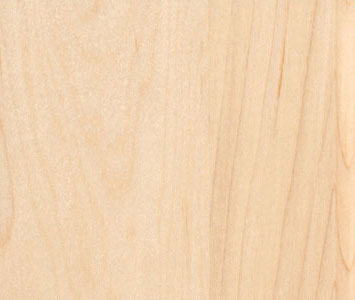 Some artist prefer maple because the firmer surface can allow for crisper lines and finer detail. The reasoning is that the harder wood surface prevents pen nibs from sinking into the surface as easily. If you use a light hand pressure when burning, this isn’t an issue.
Another claim I read stated that maple stays lighter in color as it ages compared to basswood. I haven’t tested this, so I can’t confirm if this is true.
I like to burn on maple, but it does require a higher heat setting than basswood. For example, I can get a tan color on basswood with my burner set around 3, but for maple I’d need a heat set at 4.5 or more. My burner goes up to 10. Keep in mind, the type of pen tip used will also impact what heat setting to use.
Another item for consideration is that maple tends to be more expensive than basswood; at least it is in the pacific northwest where I live.
Maple is a wood that I can easily find at home improvement stores like Lowe’s and Home Depot. It can also be found at specialty wood stores.
Generally I use maple when I’m burning on an object that will get handled a lot like a cribbage boards.
 Todd makes the cribbage boards. A few years back it was a little side business he had going on. Most of the cribbage boards were travel style, so the board folded in half.
 After Todd made the board, I put artwork on it. A lot of times the artwork was boring stuff like sports logos and fish.
This photo shows one notable exception when I was allowed to do what I wanted.
 I have burned a number of small flower images, like this trillium, on maple.
The maple I used was a leftover piece from one of Todd’s projects.
If you know of any wood workers, you might check with them to see if they have any scrap wood you can use. They might give it to you or sale it to you cheap.
POPLAR
 Poplar is the last wood I will mention. This is another wood that I can find at home improvement stores and specialty wood stores.
Poplar requires a higher heat to burn on than basswood, but not as high as maple. It also tends to be cheaper than maple.
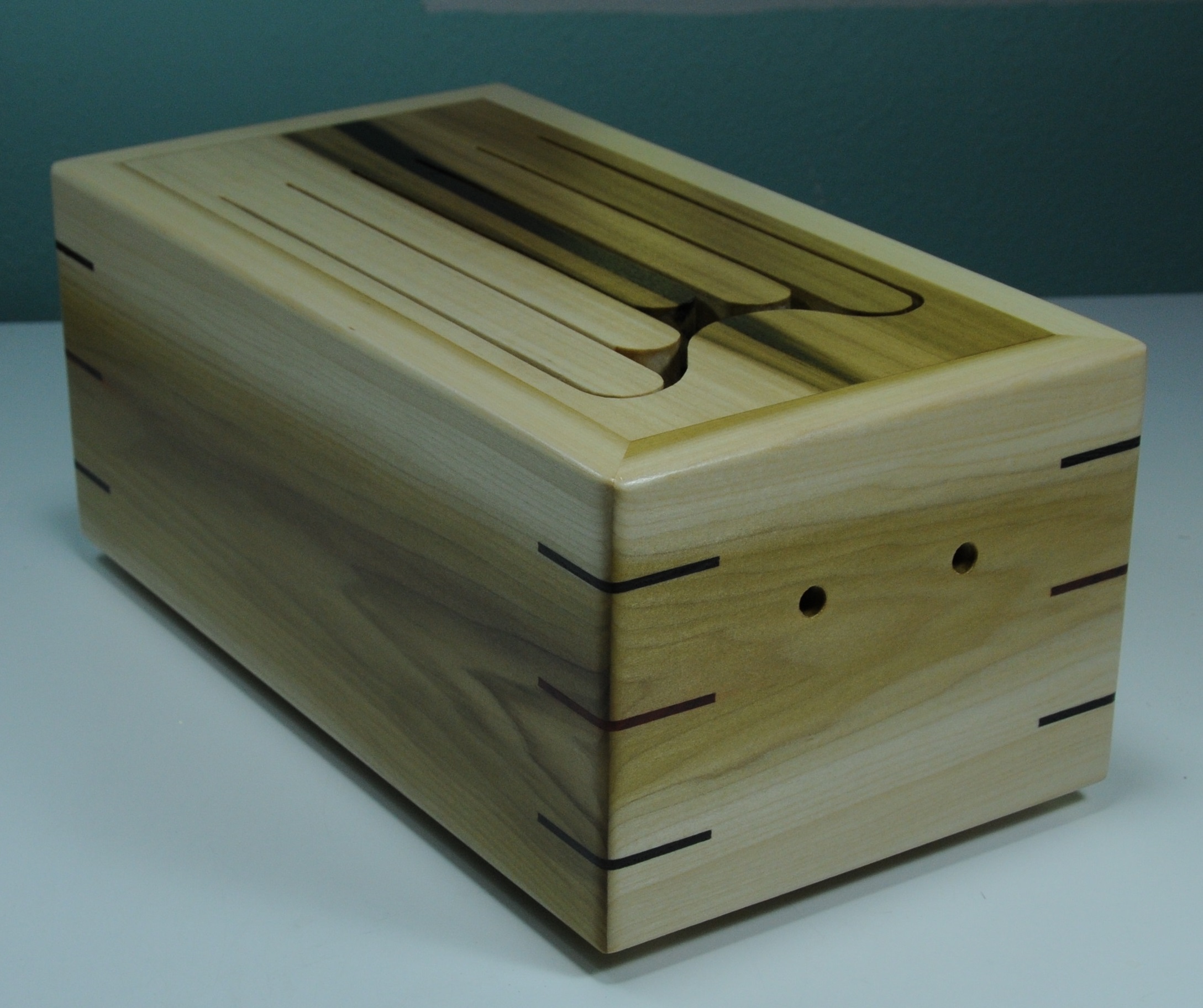 One thing to keep in mind with poplar is that it can be very colorful as this wood drum Todd build shows.
Todd loves to buy boards that have very pronounced purple and / or green streaks of color. Usually he has to get boards this colorful at specialty wood stores.
Regardless, I wouldn’t buy poplar online without seeing a photo of the actual board first.
I have burned a number of projects on poplar. Again, I’m using boards that are left over pieces from Todd’s wood working projects. Below are a couple of examples:


I do have a blog that talks about every type of wood I have ever burned on. The blog includes pros and cons of each wood and my personal thoughts on it. Here’s a link to the blog: Wood Types
IN CONCLUSION
This concludes my blog. I hope the information was helpful.
Brenda
Jan 6, 2026
Want to subscribe?
- Click on the “Leave a Comment” field at the end of any post (blog) and a subscribe option will appear.
- Put something in the comment field (if you put “test” or “just subscribing” I won’t make your comment public)
- Fill in the sections for your email address and name, and then click on the “notify me of new posts via email.”
- You will get a confirmation email from WordPress confirming you want to subscribe.
- Click on the confirm button in that email and you’re done.
Please note that I do not send out emails. If you have a WordPress account there is a way to subscribe within the WordPress system, but I cannot provide specifics on how it works as I don’t know.
Thank you for that in depth description of woods I also use basswood. I’m curious I live in Oregon where in the P N W do you live
Hi Jennie,
I live in the kelso/longview area in Washington state. Basically about an hour from Vancouver, wa / Portland, or.
Brenda
I love your blog and I am happy that your favorite wood to burn on is basswood. It’s inexpensive and doesn’t require a lot of sanding . I often wondered if I should invest in more expensive wood. But I am content to keep burning on basswood. Thank you
Hi Jean,
basswood is a great wood to burn on. While I’ve tried a lot of different woods, basswood continues to be my favorite.
Thanks for the comment.
Brenda
Thankyou. This was helpful.
I did purchase basswood but my last order was a pk of plywood boards. I just wont burn deep til I buy basswood. Im hoping you have a section on tip bleaning and do you use any varnish after?
Hi Cynthia,
I assume you mean tip cleaning. I use polishing compound and a leather strop for that. Here’s a link to the blog: https://wp.me/p8j0lZ-6FB
All of my projects get sealed with either polycrylic or lacquer. Todd prefers lacquer only because you don’t have to sand between coats.
Brenda